
"Ecuadorian coffee regions"
300 article(s) found

What are the characteristics of Ecuadorian coffee?
For the exchange of professional baristas, please pay attention to the coffee workshop (Wechat official account cafe_style) located in Ecuador between Colombia and Peru in South America. Coffee has been grown for a long time. Loha is located in southern Ecuador, close to the Andes Mountains. It is one of the highest coffee-growing regions in the world, with an elevation of 1450-2000 meters. It is also an important coffee export city in the country. Coffee

Introduction to the fragrant Ecuadorian Coffee Flavor and the Fine Coffee in the Manor area
The country is divided into three parts: the western coast, the central mountainous region and the eastern region. Map of Ecuador the western coast of the map of Ecuador: including coastal plains and foothills, high in the east and low in the west, generally below 200 meters above sea level, with some hills and low mountains at an altitude of 600 to 700 meters. Belongs to the tropical rain forest climate, the southernmost end begins to transition to the savanna climate. The average annual precipitation from north to south is 3.
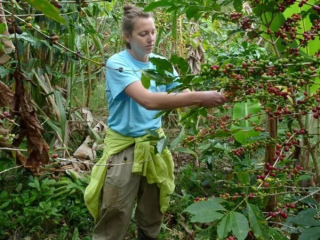
Introduction to the history of rich manors in Ecuadorian coffee producing areas the taste and flavor characteristics of Ecuadorian coffee beans
Following caf é (Wechat official account vdailycom) found that Arabica Coffee Tree, which opened a small shop of its own, was first introduced to Ecuador in 1952, and its coffee was of good quality, especially the coffee harvested in early June. Ecuadorian coffee beans can be divided into Galapago

Coffee origin: characteristics of Ecuadorian coffee
Coffee origin: the Ecuadorian Arabian Coffee Tree was first introduced to Ecuador (Ecuador) in 1952 and its coffee quality is very good, especially the coffee harvested in early June. Ecuadorian coffee beans can be divided into two varieties: Galapagos and Gigante, both of which have the characteristics of large granules and heavy weight. Ecuadorian coffee can be classified into first class according to quality (No

Unique aroma of Ecuadorian coffee flavor Taste Manor Features of the producing area Introduction Hasenda Coffee Garden
Ecuador's unique ecosystem advantages make coffee produced in different coffee producing areas have a unique taste. This is why coffee made from Ecuadorian coffee beans, whether single-serve or blended, is endless and tasteless with every sip. Spend an inspirational afternoon with star baristas and Michelin chefs! For the greater good.

Ecuadorian Coffee-Vidarian Nomarino washed Kaddura / Tibica Coffee beans Story Information
Professional coffee knowledge exchange more coffee bean information please follow the coffee workshop (Wechat official account cafe_style) Coffee Exchange bean hunter Lewis Harding has just returned from Ecuador and is now on a bean-hunting trip to Rwanda, Burundi and Congo. The Asian edition of roast magazine invited him to write about Ecuador's search for beans and published it in the July-August issue. Ergua

Introduction to the fragrant Ecuadorian Coffee Flavor and the Fine Coffee in the Manor area
Ecuador is divided into the western coast, the central mountains, the eastern Amazon River basin and the four central regions of the Galapagos Islands, with diverse climatic conditions. The western coastal plain belongs to the tropical rain forest climate, with an average temperature of 23-25 ℃. The central Andes. The intermountain basin in this area belongs to the savanna climate, and the mountain belongs to the subtropical forest climate, with perennial snow above 4000 meters above sea level. Annual average decline

A brief introduction to the history and culture of the origin and development of Ecuadorian boutique coffee beans with balanced and refreshing taste
However, Thomas will never know that the island they landed on is the only island in the Galapagos Islands with plenty of fresh water. It is today's St. Cristobal Island (Saint Cristobal), a well-known South American brand, Ecuadorian Grade A coffee, with a large state-run seed value garden; 100% from the 1300-2000 m high natural vegetation zone, popular in Europe and the United States.

Introduction to the fragrant Ecuadorian Coffee Flavor and the Fine Coffee in the Manor area
Ecuador is divided into the western coast, the central mountains, the eastern Amazon River basin and the four central regions of the Galapagos Islands, with diverse climatic conditions. The western coastal plain belongs to the tropical rain forest climate, with an average temperature of 23-25 ℃. The central Andes. The intermountain basin in this area belongs to the savanna climate, and the mountain belongs to the subtropical forest climate, with perennial snow above 4000 meters above sea level. Annual average decline

Ecuadorian Coffee Manor introduces Hassanda Coffee Garden, an Ecuadorian coffee producing area
Yaocote, a gourmet coffee from Puerto Rico, is grown only on three farms in the southwest of the island. It has a strong flavor and a long aftertaste. This kind of coffee is very expensive and its flavor is comparable to that of any other coffee variety in the world. In the Yauco area, the coffee is owned and operated by local planters. The mountain climate here is mild and the plants are long.

Produced in the Ecuadorian Arabica Coffee San Cristobal region of the Andes
Because of the unique role of the Galapagos Islands in the course of history, the Government of Ecuador has designated the Galapagos Islands as a national park, the land is no longer allowed to be reclaimed as new agricultural land, and the introduction and use of chemical fertilizers, pesticides, herbicides and other chemicals are strictly prohibited, so coffee produced in the Galapagos Islands is recognized as a natural product. It's increasing. The best Arabica coffee.

Ecuadorian honey processed coffee beans flavor description grinding scale varieties production area introduction
When Thomas and his crew landed on the island, they frantically searched for water and were so thirsty that they squeezed juice from the fat leaves of cacti to drink. Finally found water in a ravine in a rock. Thomas attributed it to God's gift because it was Good Friday,

Introduction to the characteristics of Ecuadorian Coffee Flavor Manor with well-balanced taste
West coast: including coastal plains and foothills, high in the east and low in the west, generally below 200 meters above sea level, with some hills and low mountains at an altitude of 600 to 700 meters. Belongs to the tropical rain forest climate, the southernmost end begins to transition to the savanna climate. The average annual precipitation decreases from more than 3000 mm to about 500mm from north to south. Central Mountains: the Andes enter Ecuador from Colombia

Unique taste of Ecuadorian coffee boutique coffee bean flavor manor area introduction
Belgian chocolate is famous all over the world, and in recent years, it is highly respected by Chinese people. In Belgian mind, the most delicious chocolate is PierreMarcolini chocolate. As the world dessert champion in 1995 and the European dessert champion in 2000, Mr. Marcolini's philosophy of success is absolute respect and dedication to ingredients. Ten years ago, he decided to do

Introduction of Ecuadorian Coffee in Loja producing area of Loha, Ecuador
Professional coffee knowledge exchange more coffee bean information please pay attention to coffee workshop (Wechat official account cafe_style) is located in South America, Colombia and Peru between Ecuador, coffee cultivation has a long history, Loha region in southern Ecuador, close to the Andes Mountains, is one of the highest coffee-growing regions in the world, is also the country's important coffee export city

Introduction to Hasunda Coffee Garden in Ecuador
Mr. Veniso, winner of the 2014 Ecuador Coffee Competition, told reporters that some of the Ecuadorian coffee is espresso made from Ecuadorian alpine coffee beans. This coffee comes from a mountain area about 1000 to 2000 meters above sea level and has a mellow taste with aromas and sweetness of fruit, grass and chocolate. Some add thin coffee from the Amazon region to this espresso.

An excellent balance of Ecuadorian Los Congo Manor coffee flavor taste characteristics of the region
From July 1927, Augusto. Cesar Sandinista led a guerrilla war against the American occupation, forcing the withdrawal of American troops in 1933. February 21, 1934 Nicaragua National Guard Commander Anastasio. Somoza. Garcia assassinated Sandino at the behest of President Roosevelt. He took office in 1936 and has since established a pro-American relationship for more than 40 years.

Introduction to varieties and flavors of Ecuadorian Coffee Manor with well-balanced and refreshing taste
The Arabian Coffee Tree was first introduced to Ecuador (Ecuador) in 1952 and its coffee is of good quality, especially the coffee harvested in early June. Ecuadorian coffee beans can be divided into two varieties: Galapagos and Gigante, both of which have the characteristics of large granules and heavy weight. Ecuadorian coffee can be divided into first class (No.1) and super excellent (ExtraSuperior) according to its quality.

Introduction to the price of varieties in manor producing areas by describing the characteristics of grinding degree and flavor of Ecuadorian coffee
The minerals are mainly oil, mainly distributed in Guayaquil Bay, and oil fields are also found in the Amazon Plain. Gold and silver are distributed in Machaki and Saluma and other places. Copper is made in Machaki. There are sulfur mines in the Cologne Islands. In addition, there is iron, lead and so on. The forest area accounts for about 68% of the country's area, mostly in the eastern region, rich in valuable wood, such as mahogany and ointment.